
Categories List
4 in 1 Fiber Laser Welding: What Processes It Really Replaces
Why is 4 in 1 fiber laser welding getting so much attention?
The interest is not only about saving floor space. It is really about combining several metalworking steps into one controlled process.
In practical terms, 4 in 1 fiber laser welding usually integrates welding, cutting, cleaning, and weld seam cleaning. That changes how a shop plans labor, fixtures, and rework.
For anyone comparing machine tools, the real question is simple: which older processes can this setup actually replace, and where are the limits?
That matters because replacement value is tied to cycle time, finish quality, training difficulty, and consistency across stainless steel, carbon steel, aluminum, and thin sheet assemblies.
RICHMAC focuses on high-precision laser and router equipment with in-house quality control, so this kind of evaluation is usually approached from a process stability angle, not just a price angle.
So what processes does 4 in 1 fiber laser welding really replace?
It can replace several separate operations, but not every version of them. The realistic replacement list is narrower and more useful than the marketing version.
- TIG welding on thin and medium-gauge parts, especially where appearance matters.
- Some MIG welding work, mainly on lighter fabrication and repetitive joints.
- Mechanical grinding or wire brushing used for surface oxide, rust, or weld cleanup.
- Basic handheld cutting steps for trimming thin metals before fit-up.
- Separate post-weld cleaning steps on visible seams.
What it usually does not replace is heavy structural welding, deep groove welds on thick plate, or high-volume automated lines that already use dedicated robotic cells.
That distinction is important. A 4 in 1 fiber laser welding system is strongest when one workshop handles mixed jobs and frequent changeovers.
Is it a TIG substitute, a cleaner, or a cutting tool first?
Most users benefit from thinking of it as a welding-centered platform with useful adjacent functions. Welding remains the main value driver in most fabrication environments.
Compared with TIG, 4 in 1 fiber laser welding often delivers faster travel speed, lower heat input, and less distortion. Those advantages matter on stainless cabinets, enclosures, frames, and decorative metalwork.
The cleaning mode is also practical. It can remove oxide, paint residue, or light contamination without heavy abrasion. That helps before welding and after welding.
The cutting function is useful, but usually for lighter trimming tasks. It should not be confused with a dedicated sheet laser cutter built for nesting and throughput.
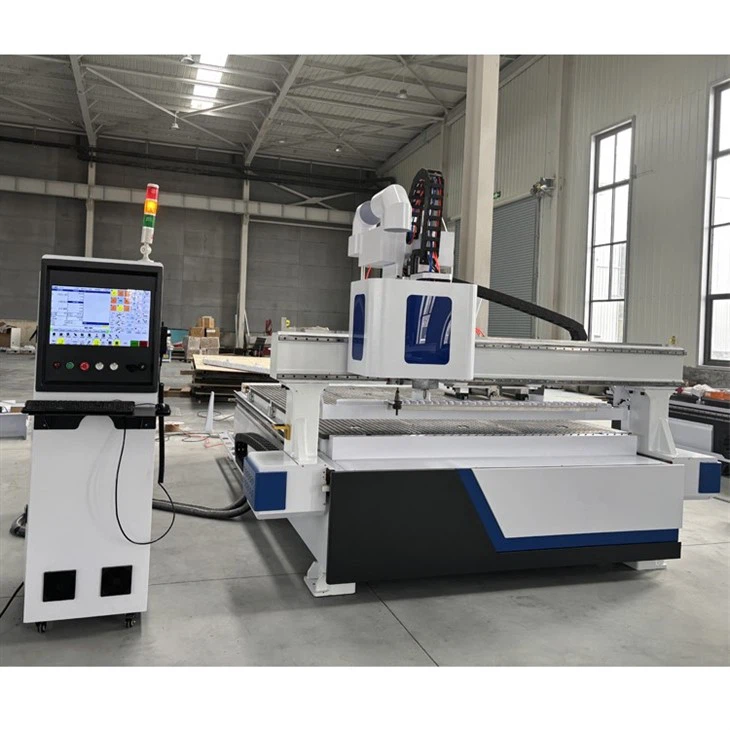
A similar logic applies across machine categories. For example, a shop may pair laser systems with an ATC CNC ROUTER MACHINE when fabrication includes both metal and composite workflow steps.
Where does 4 in 1 fiber laser welding make the most sense?
It fits best where process switching is frequent and surface finish matters. Mixed production is usually a stronger fit than very narrow mass production.
In actual applications, this machine is often considered for kitchen equipment, sheet metal boxes, metal furniture, signage structures, railings, and custom enclosure work.
What are the most common misunderstandings before choosing one?
A frequent mistake is assuming 4 in 1 fiber laser welding will replace every welding station. It will not. It replaces selected operations best, not all fabrication complexity.
Another misunderstanding is treating cleaning mode as the same as heavy rust removal. Laser cleaning is effective, but the contamination type and thickness still matter.
Some buyers also overestimate cutting ability. If the workflow depends on high-speed profile cutting, a dedicated fiber laser cutter still does that job better.
- Confirm the real material range, not the brochure range.
- Check weld quality on your actual joint samples.
- Review consumables, optics maintenance, and operator learning time.
- Ask whether process settings are stable across different batch sizes.
The stronger evaluation method is sample-based. A short test on real parts usually reveals more than a long feature list.
How should value be judged beyond the purchase price?
The useful comparison is not machine price versus machine price. It is old workflow versus new workflow.
If 4 in 1 fiber laser welding removes a welding step, a cleaning step, and part of finishing labor, the savings may come from time and rework, not from a single headline metric.
Look at setup reduction, operator movement, defect rate, heat distortion, and appearance consistency. Those are often the real decision points.
It also helps to consider long-term flexibility. Shops adding new process types sometimes balance laser equipment with other CNC assets, including a second-stage solution like an ATC CNC ROUTER MACHINE for non-metal routing tasks.
RICHMAC’s manufacturing background matters here because precision, internal quality control, and machine consistency directly affect whether a multi-function system performs reliably over time.
What is the smartest next step before making a decision?
Start by listing the exact processes you want to replace. Be specific about weld type, material, thickness, finish standard, and daily batch variation.
Then compare those needs against what 4 in 1 fiber laser welding does best: fast, precise joining, lighter cutting support, and cleaner pre- and post-weld surfaces.
If the target is mixed fabrication with frequent product changes, this technology can be a strong process simplifier. If the target is heavy plate welding or dedicated cutting throughput, its role is narrower.
A sensible evaluation includes live samples, operating cost review, and a clear pass-fail standard for weld appearance, speed, and rework. That is usually the clearest way to judge replacement value.
Leave A Reply
Get real-time quotes
Interested? Leave your contact details.