
Categories List
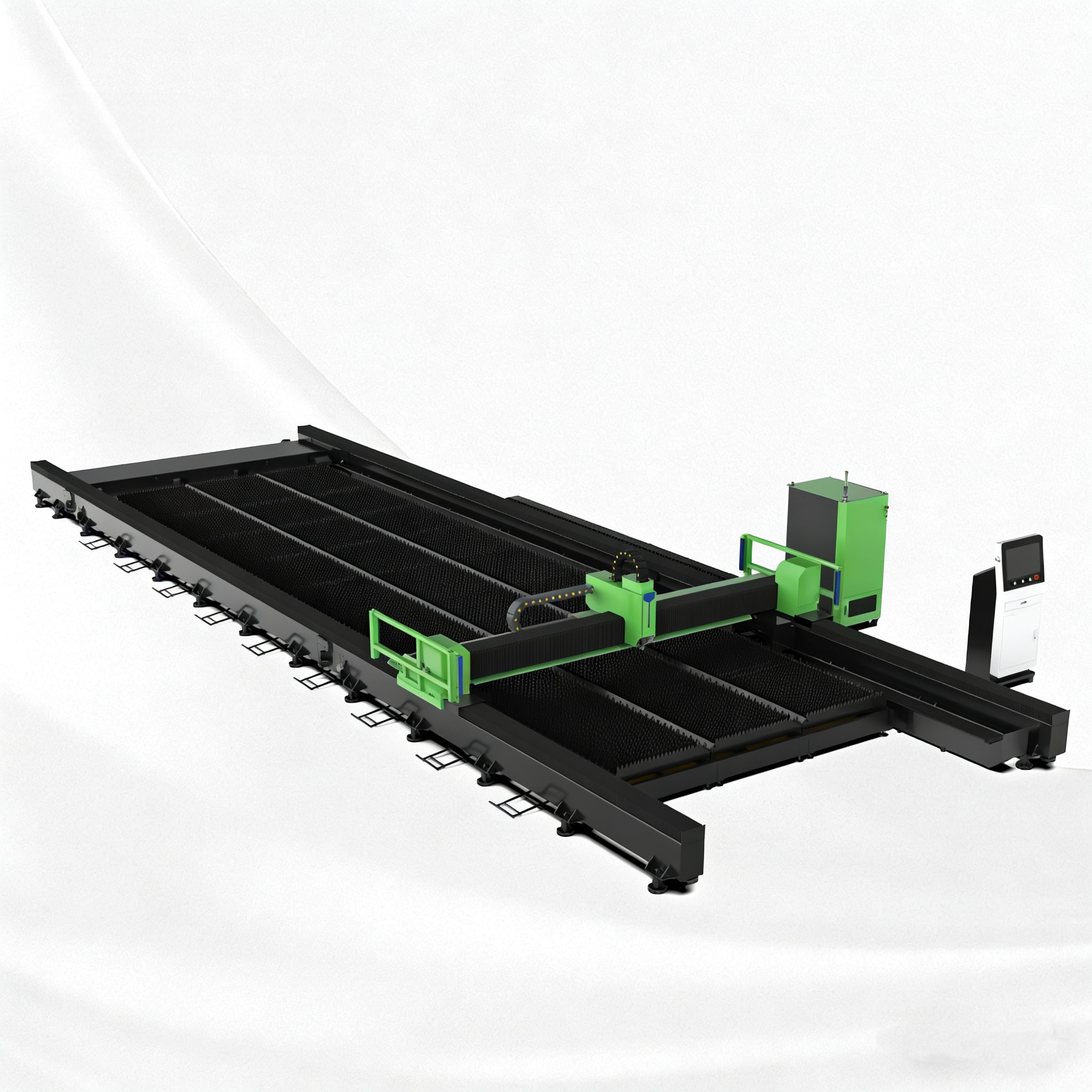
Key Factors for Selecting a Large-Format Ground-Rail Sheet Cutting Machine
The decision to buy a large-format ground-rail sheet cutting machine should start with the work that must leave the table, not with the largest cutting area shown in a brochure. A machine may be able to process oversized sheet, but that does not automatically mean it will hold accuracy across the full working length, load material efficiently, or remain practical to maintain.
For operations handling long plates, wide panels, or mixed sheet sizes, the ground-rail design can be a sensible route to a larger processing envelope. The rail system is installed along the floor and supports the moving gantry over an extended distance. This layout avoids some transport limits associated with one-piece machine beds. Its value, however, depends on installation quality, machine rigidity, motion control, and how well the machine matches the material flow around it.
When evaluating a large Size ground rail Sheet cutting solution, treat cutting size as one requirement within a broader production system. The right choice is the one that produces acceptable parts consistently, fits the available space and handling method, and can be supported throughout its working life.
Start with the largest real part, not the largest possible sheet
Buyers often begin by asking for a machine that can accommodate the largest sheet they might process. That is understandable, but it can lead to unnecessary cost and difficult installation if occasional oversize work is allowed to define the entire investment.
List the largest finished part, the largest incoming sheet, typical nesting patterns, expected edge clearance, and loading direction. These are different dimensions. A machine may technically accept a sheet that fits the table, while leaving too little margin for loading error, clamps, slats, or practical handling. If sheets arrive with bent edges or protective film, additional clearance becomes more important.
Also separate routine production from exceptional jobs. If very large parts are frequent, a long ground-rail system may be justified. If they are rare, outsourcing the oversize work or redesigning the part into assemblies may produce a more balanced investment. Purchasing excess travel “just in case” increases rail installation length, floor requirements, material-handling complexity, and the area that must remain clear around the machine.
The rail foundation is part of the machine
With a ground-rail machine, the floor and rail installation influence the final result. The gantry can only move as accurately as the rails allow. A high-quality cutting head and control system cannot fully compensate for rails that are poorly aligned, unevenly supported, contaminated, or allowed to shift over time.
Ask the supplier to explain the site preparation process in practical terms. The discussion should cover foundation condition, rail mounting method, leveling and alignment procedures, drainage or moisture concerns, cable routing, and how the completed installation is inspected. It should also make clear who is responsible for each stage: civil contractor, installer, machine supplier, or the site team.
Long rails are exposed to more environmental variation than a compact enclosed bed. Temperature changes, dust, forklift traffic, and nearby vibration can all affect the installation. The question is not whether these conditions exist, because most fabrication shops have some of them. The question is whether the selected rail design, covers, lubrication arrangement, and maintenance access are appropriate for the actual environment.
A useful purchasing principle is simple: do not evaluate the ground rail as an accessory. Evaluate it as a precision component with the same seriousness as the gantry, drive system, and laser source.
Rigidity matters more as the cutting envelope grows
A larger span makes structural behavior more important. During rapid moves, direction changes, and acceleration, the gantry and carriage are subjected to dynamic forces. If the structure lacks sufficient stiffness, the machine may show inconsistent corner quality, reduced repeatability at different table positions, or a need to lower operating speeds to preserve acceptable results.
Do not rely on the broad term “heavy-duty” when comparing machines. Request a clear explanation of the structural design: gantry construction, drive arrangement, rail spacing, rack-and-pinion or other transmission method, and how the moving mass is managed. The purpose is not to compare isolated component names. It is to understand whether the complete motion system is designed for stable performance over the required travel.
Dual-drive synchronization deserves specific attention on long gantries. If the two sides of a moving beam do not remain properly coordinated, the gantry can rack slightly during motion. This affects positioning and places unnecessary stress on mechanical components. The controller, servo system, homing method, and mechanical layout should work together to keep the beam square throughout operation.
Where possible, review sample parts made at different locations on the cutting area. A clean result near the center of the table is useful, but it does not prove the same quality at the far ends of a large travel path. Inspect holes, corners, long straight edges, and repeated features rather than judging only by a quick cut demonstration.
Define accuracy in terms of parts and tolerances
“High accuracy” is not a purchasing specification. It needs to be connected to the parts being produced. A decorative panel, a structural base plate, and a component that must align with machined holes may all require different levels of dimensional control and edge quality.
Before comparing quotations, prepare a representative part list. Include material type, thickness range, common hole sizes, smallest features, critical dimensions, expected quantities, and any downstream process such as bending, welding, machining, or coating. This list reveals whether cutting quality must be optimized for speed, precision, edge condition, or a combination of all three.
For example, very small holes and intricate geometry place different demands on the process than large profiles cut from heavier plate. Thick material may require slower and more stable piercing, while thin sheet can be sensitive to heat distortion and handling. A machine suitable for a broad material range is valuable only if the intended cutting parameters, gas system, nozzle selection, and nesting workflow are also workable for that range.
Ask how repeatability is checked after installation and how alignment is verified during service. Accuracy is not just an acceptance-day condition. It must remain manageable after normal operation, maintenance, and changes in the shop environment.
Cutting capacity is limited by the whole workflow
A large-format laser can become the fastest process in a slow material-handling chain. Long sheets must be loaded, positioned, cut, unloaded, sorted, and moved safely. If material is loaded manually with an overhead crane, the production rhythm will differ greatly from an installation using automated loading and unloading equipment.
Map the job from raw sheet to sorted finished parts. Consider where full sheets wait, how they reach the cutting table, how finished pieces are removed, where skeletons go, and whether operators have safe access along both sides of the machine. This exercise often identifies the real bottleneck before the purchase order is issued.
Cycle time should be viewed beyond the cutting head’s travel speed. Piercing, contour transitions, sheet change, part removal, nozzle checks, and program preparation all affect the useful output of the system. A lower-priced machine can be the weaker option when it demands more manual intervention or creates unstable downstream work.
Choose the cutting configuration around material reality
Fiber laser cutting is often selected for its flexibility across common metal sheet applications, but the optimum configuration still depends on the actual mix of materials and thicknesses. The source, cutting head, assist gas arrangement, height sensing, and control software should be assessed as a connected process rather than as separate line items.
Do not specify laser power based only on a desire for the highest number available. Higher power can expand processing capability and improve productivity in suitable applications, but it also changes the requirements for power supply, cooling, gas delivery, process control, and operator discipline. For work concentrated in a modest thickness range, a well-matched system may provide better operating value than an oversized configuration that is rarely used near its intended capacity.
Assist gas supply is frequently underestimated. Gas purity, pressure stability, storage, piping capacity, and delivery distance can affect cutting consistency. A quotation that appears complete may still leave the site responsible for essential gas infrastructure. The same applies to extraction. Large sheets generate substantial smoke and dust over a wide area, so fume collection must be designed around the table size, material type, and cutting pattern rather than added as an afterthought.
Software should reduce decisions on the shop floor
The software is where the sales order becomes machine movement. Nesting quality affects material utilization; process libraries influence cut consistency; and the control interface determines how easily operators can recover from interruptions or adjust to a changed sheet condition.
Review the workflow for importing drawings, preparing nests, assigning material, selecting parameters, simulating a job, and tracking remnants. A useful system should make normal work repeatable without preventing experienced users from making controlled adjustments. It should also support clear separation between approved process settings and informal changes made on the shop floor.
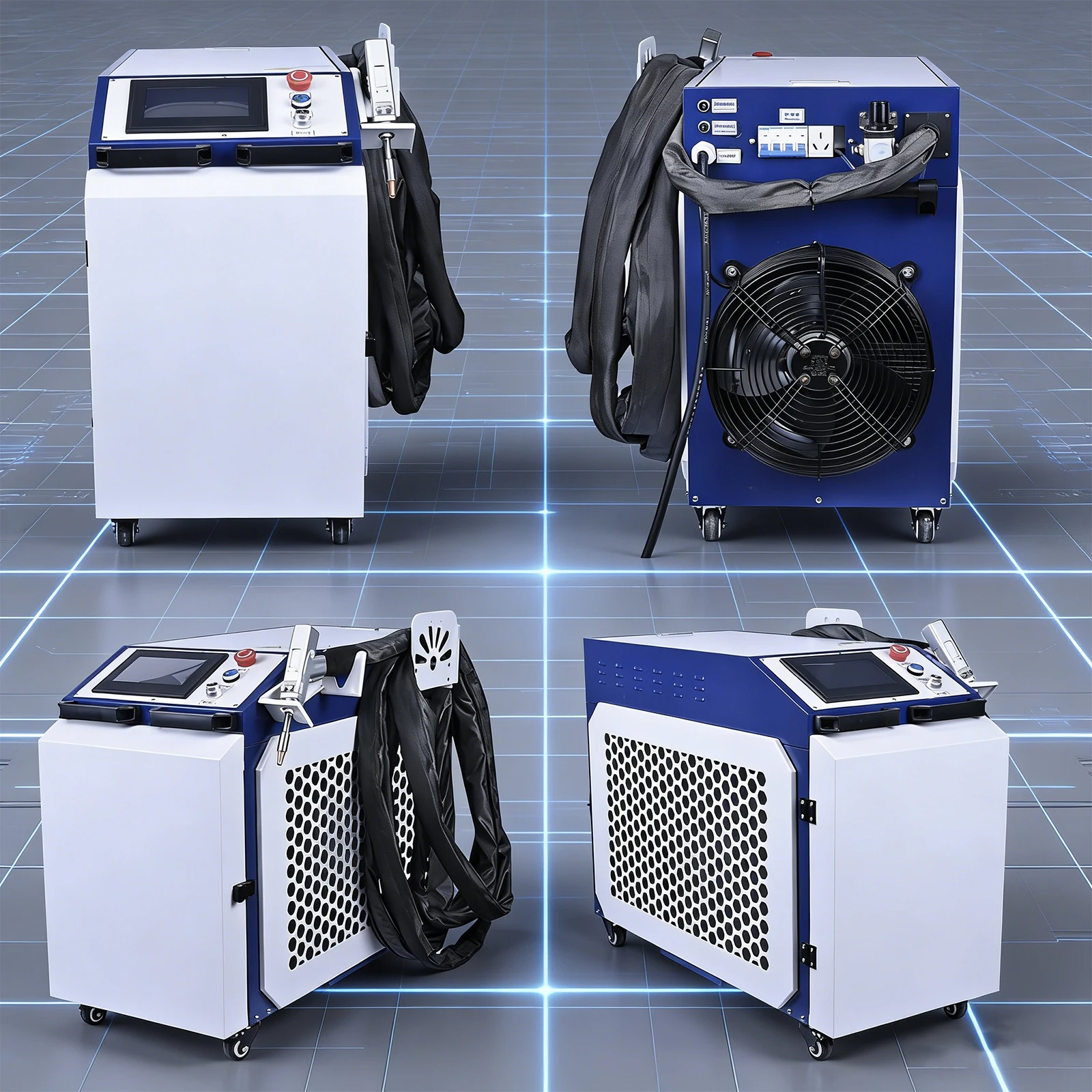
For operations that cut parts before assembly, software integration can matter beyond the cutting table. Part labels, sorting instructions, and job traceability can reduce confusion when many similar pieces leave a large sheet. This is particularly relevant when cut components proceed to bending and welding. A separate tool such as a 4 in 1 fiber laser welding machine may be relevant to an integrated fabrication cell, but it should be evaluated independently from the ground-rail cutter. Combining process stages in a purchasing discussion does not mean one machine can replace the other.
Maintenance access and support determine usable uptime
Large machines create maintenance tasks over a larger physical footprint. Consider access to rails, racks, lubrication points, bellows or covers, cable carriers, cutting head consumables, electrical cabinets, and extraction ducts. A component that is simple to replace on a compact machine may require more planning when it is positioned along a long rail installation.
Ask for a routine maintenance schedule that distinguishes daily cleaning, periodic inspection, calibration activities, and service tasks that require a trained technician. The aim is to identify which tasks the site team can perform safely and which require supplier support. Consumables and critical spares should be discussed before commissioning, especially when production schedules cannot tolerate extended waiting periods.
Supplier capability should be assessed in equally practical terms. Confirm the commissioning scope, operator training format, remote diagnostic process, service response arrangement, availability of technical documentation, and spare-parts support. RISTEC specializes in high-precision laser and router machines, with quality retained within its manufacturing process; for a large rail-based installation, the more important purchasing question is how that engineering responsibility translates into installation discipline, commissioning, and long-term service access at the operating site.
Compare quotations on an equal scope
Two proposals can carry similar machine descriptions while including very different project scopes. One may include rail installation, dust extraction interfaces, safety enclosure elements, training, tooling, software, and acceptance support. Another may quote only the core machine. Comparing headline prices without normalizing these details creates an avoidable budget surprise later.
Create a comparison sheet that records the full delivered configuration: working envelope, rail and foundation scope, laser source and head, motion system, cutting table design, control and nesting software, gas interfaces, extraction requirement, safety provisions, installation, training, warranty terms, and recommended spares. Mark unclear items rather than assuming they are included.
It is also useful to define acceptance criteria before ordering. These should relate to representative materials and parts, not only to a generic machine demonstration. Agreeing on the intended production range gives both sides a clearer basis for installation and handover.
A disciplined selection sequence
- Build a representative job list from current and expected work, separating normal demand from rare oversize requirements.
- Map sheet movement, part removal, extraction, power, gas, and operator access across the available floor space.
- Assess the foundation and rail installation as a precision project rather than a general site task.
- Compare structural design, motion control, and cut samples across the full working envelope.
- Evaluate software, maintenance access, commissioning, and support as part of the production system.
- Normalize supplier quotations so the full installed scope, not the headline machine price, is compared.
The strongest purchase decision is usually not the machine with the largest stated specification. It is the system whose rail installation, structural design, cutting configuration, material flow, and service model are aligned with the parts that must be produced every day.
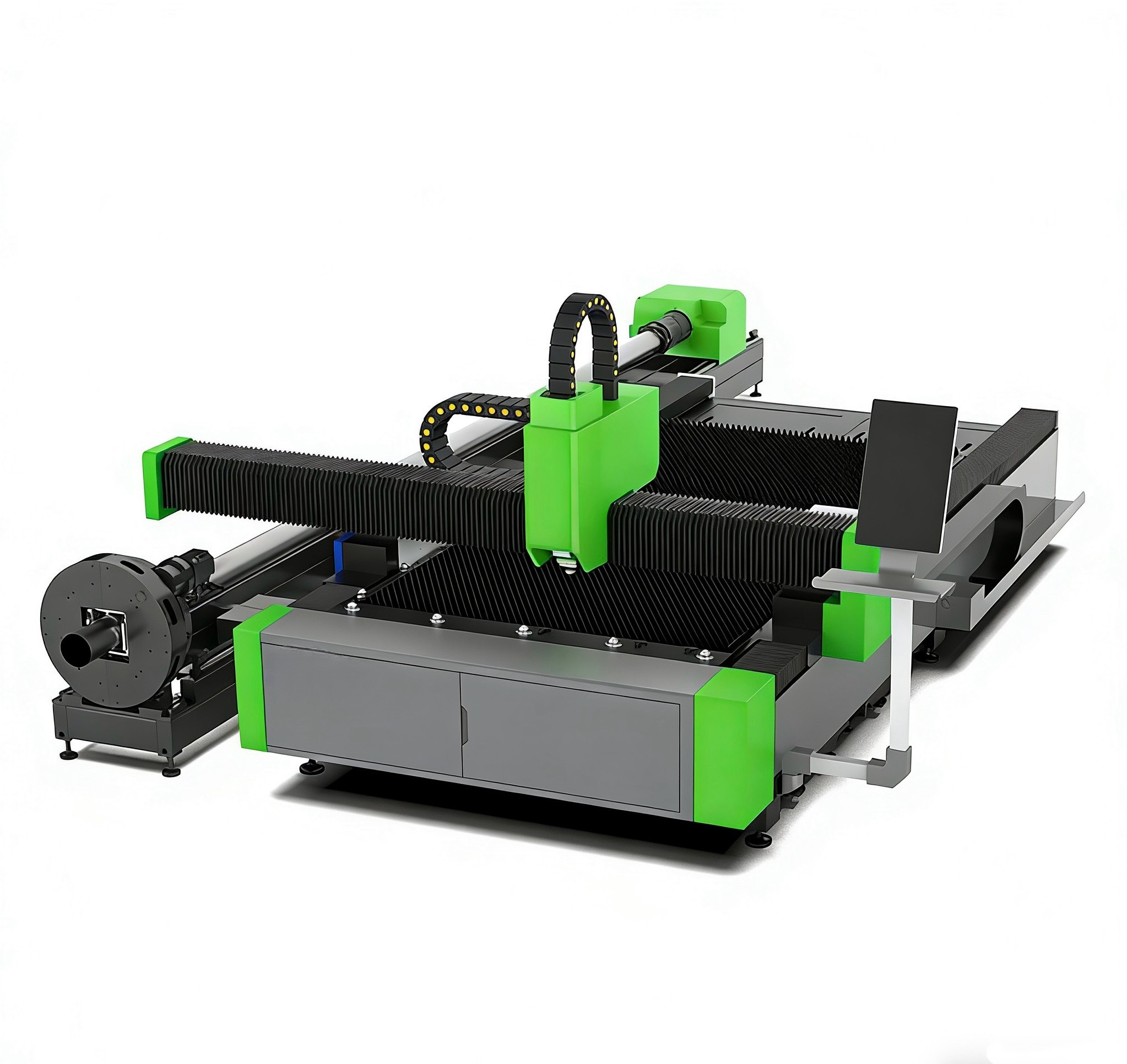
 Metal Sheet and Pipe Laser CutterThe Sheet and Pipe Laser Cutter is a dual-purpose, high-efficiency system engineered to process both flat metal sheets and various profiles of tubes/pipes on a single machine. By eliminating the need to purchase two separate systems, it offers metal fabricators a highly cost-effective solution that saves significant floor space, reduces labor, and multiplies production capabilities.
 large Size ground rail Sheet Laser CutterThe large Size ground rail Sheet Laser Cutter is a high-performance industrial solution specifically engineered for the heavy-duty processing of extra-long and extra-wide metal plates. By utilizing a floor-standing rail (ground rail) design, this machine eliminates the size constraints of traditional integrated frames, offering an "infinite" expansion capability for large-scale manufacturing
Leave A Reply
Get real-time quotes
Interested? Leave your contact details.