
Categories List
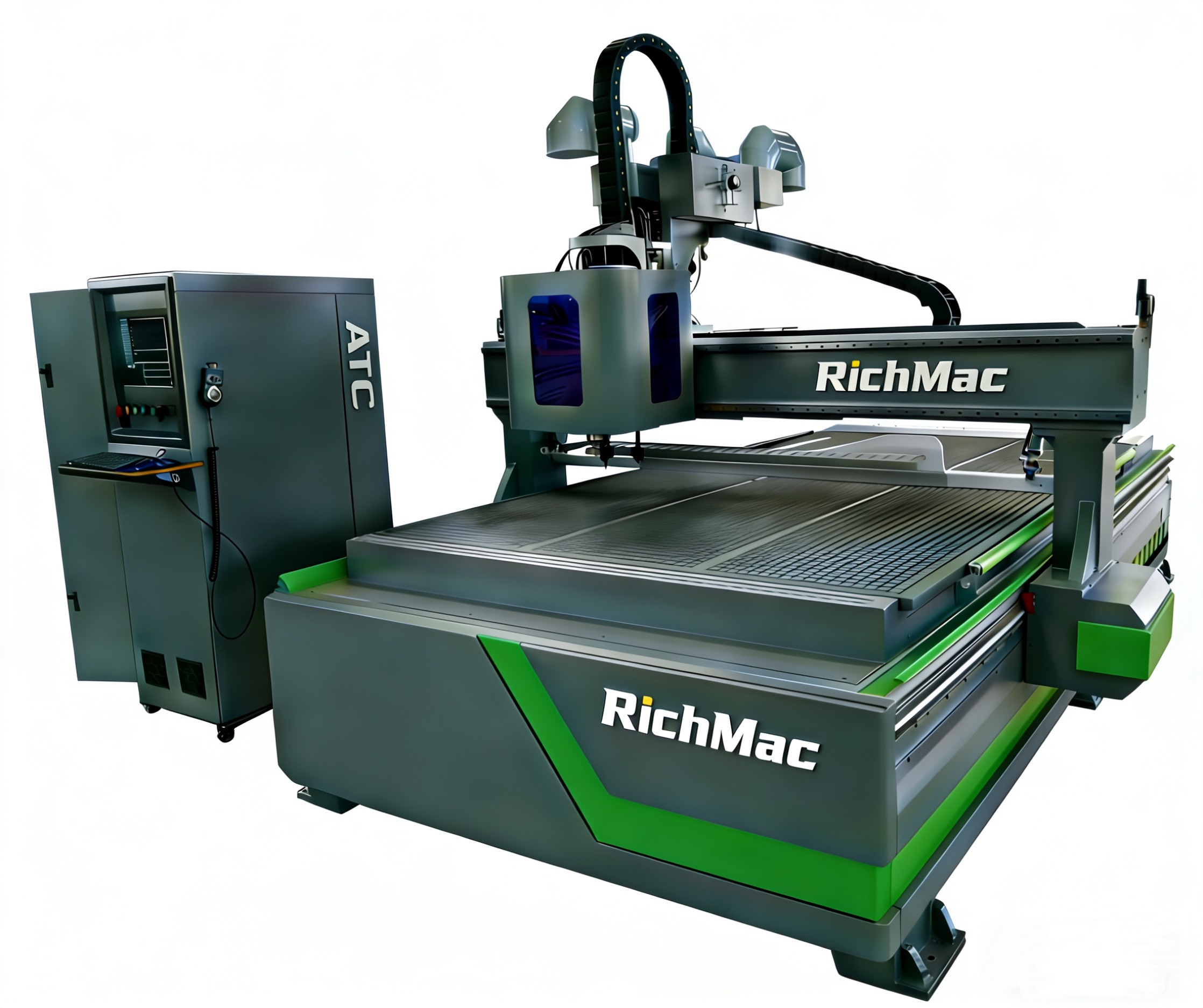
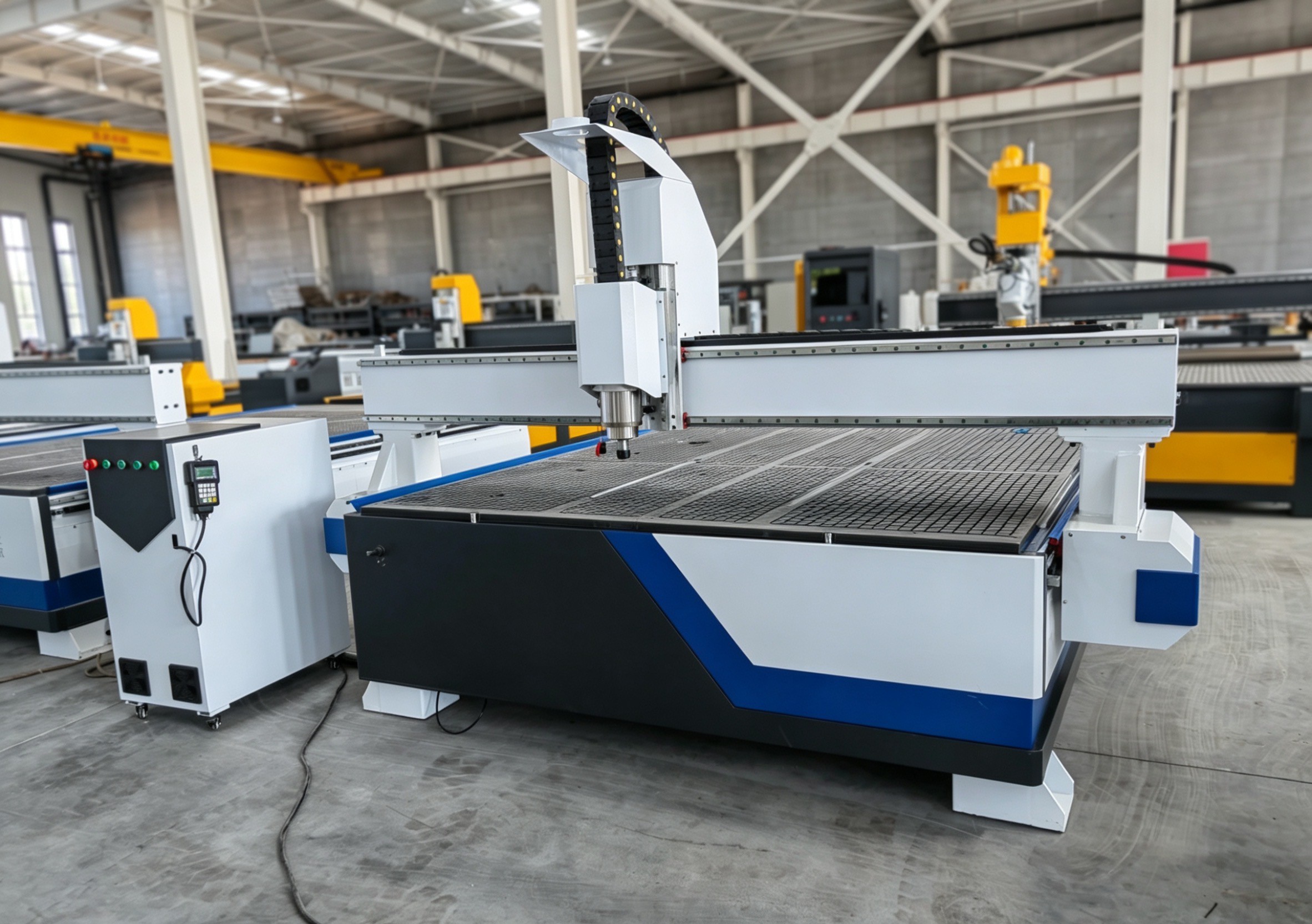
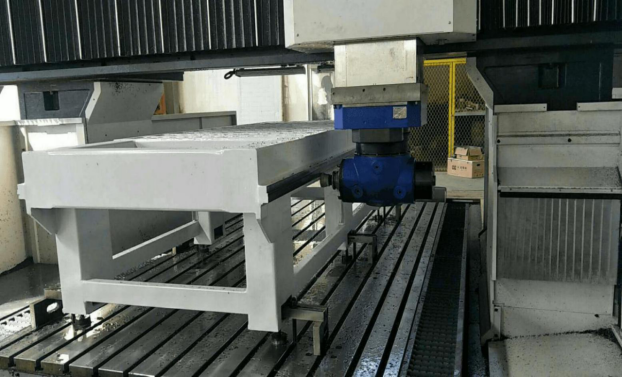
When a CNC Router Delivers Better Value Than a Laser Cutter in Panel Fabrication
A CNC router delivers better value than a laser cutter when panel work involves thickness, machining beyond through-cuts, mixed materials, or frequent design changes. The practical question is not which machine is more advanced. It is how to choose between a router machine and a laser cutter based on the panels the shop must process every day, the finish the customer will accept, and the costs that continue after installation.
A laser can be the right tool for high-speed profiling of suitable sheet materials. Its non-contact process and narrow kerf are useful where fast, repeatable cutting is the primary requirement. But panel fabrication is rarely limited to cutting outlines. Cabinet components need pockets, hinge cups, slots, rebates, drilled holes, edge details, and machining on thicker board. Sign panels may need engraved lettering, V-carving, or shaped edges. Composite panels can introduce heat-related risks. In these situations, a CNC router often creates more usable output from one setup and one capital purchase.
Start with the part, not the machine category
The quickest way to make a poor comparison is to compare advertised cutting speed. A machine may move rapidly in a demonstration yet still be a weak fit for the finished part. Procurement should begin with a representative sample of the production mix: not only the easiest rectangular panel, but also the parts with holes, internal cutouts, grooves, shaped edges, and the thickest material normally produced.
A router removes material mechanically with a rotating tool. This gives it a broad machining role. It can cut a contour, create a shallow pocket, drill a row of construction holes, form a dado, or engrave a surface in the same program. A laser uses concentrated energy to separate or mark material. It is highly effective when the desired result is primarily a clean, narrow cut in a material that responds well to the laser process.
That difference matters because many panel factories pay for a laser cutter and then retain secondary equipment for the machining steps the laser cannot perform. A router may have a lower headline advantage in a narrow cutting-only comparison, yet provide stronger value across the full route sheet.
Where a CNC router usually has the stronger case
Thicker engineered wood and solid-surface panels
For plywood, MDF, particleboard, laminated board, acrylic, solid-surface material, and similar sheet products, routing is often the more flexible production method. Tool selection, spindle speed, feed rate, hold-down, and chip evacuation can be adjusted to suit the material and finish requirement. The router produces chips rather than relying on thermal separation, which avoids the heat-affected edge associated with laser cutting.
That does not mean routing automatically produces a perfect edge. Laminates can chip if the cutter geometry, support, or program strategy is wrong. Veneered panels need careful handling. However, these are controllable machining issues. The shop can use compression tooling, suitable entry and exit strategies, sacrificial spoilboards, and appropriate dust extraction to protect the visible surface.
Laser cutting can be less attractive when panel thickness rises or when the material contains binders, coatings, laminates, or layered structures that react inconsistently to heat. Edge darkening, odor, residue, and localized melting may be unacceptable on appearance-critical products or may create a downstream cleaning task.
Parts that need more than an outside profile
This is the point where router value is most frequently underestimated. A cabinet side panel does not only require an outline. It may need shelf-pin holes, connector bores, back-panel grooves, hinge drilling, and pocketed hardware locations. A door or decorative panel may need raised details, chamfers, textured carving, or engraved information. A router can complete these features without moving the panel to separate drilling or milling equipment.
When reviewing quotations, list every operation currently performed after cutting. If a router can absorb several of them, compare the investment against the cost, handling time, floor space, programming effort, and quality risk of maintaining separate stations. The relevant measure is completed parts ready for assembly, not sheets cut per hour.
Mixed-material work and uncertain demand
A shop producing a stable, narrow range of laser-friendly sheets may justify a dedicated laser. But many manufacturers process changing combinations of wood panels, plastics, aluminum composite panels, foam boards, and non-ferrous sheets. Material compatibility needs testing in every case, but routing offers a familiar and adaptable process across a wide range of non-metal panel applications.
Versatility also protects the purchase when demand changes. A router table can be used for nested cabinet components one week, signage substrates the next, and prototyping or fixture work after that. This is valuable where order sizes vary or product development is active. The machine is not tied to a single thermal cutting workflow.
Cut quality is not one requirement
“Clean edge” is often used as though it has one meaning. It does not. A buyer should define what clean means for the actual panel: no burr, no chipped laminate, no darkened edge, no melted film, no sanding, or a ready-to-bond surface. The acceptable result changes with material, coating, edge treatment, and product use.
A sample-cut review should include visible and hidden faces, internal corners, small holes, narrow webs, protective films, and representative coatings. Evaluating only a large outer contour conceals the defects that often determine whether a process is usable in production.
Compare total cost through the entire panel workflow
Machine purchase price is only one line in the decision. A laser system may require dedicated extraction and filtration suited to the materials being processed. Routing requires dust extraction, tooling management, spoilboard maintenance, and reliable vacuum workholding. Both need trained operators, preventive maintenance, programming discipline, and safe material handling.
The comparison becomes clearer when costs are tied to work steps. For each candidate machine, map loading, locating, cutting or machining, unloading, edge cleaning, drilling, inspection, and rework. Include tool changes and material setup changes, because a machine that is fast on repeated sheets may be inefficient when the schedule contains frequent small batches.
Router tooling is a visible recurring cost, but it is also a controllable process variable. The right cutter can improve cut quality, cycle time, and tool life. Laser consumables and servicing should likewise be assessed against the actual materials and duty cycle rather than treated as a fixed operating figure. Ask suppliers to show how the proposed configuration handles your own sample parts, including the features that create the most scrap today.
Workholding can determine whether the router delivers its promised value
Routing places mechanical force on the panel. If small parts shift after being cut free, the result may be damaged edges, broken tools, or rejected pieces. This is why vacuum zoning, spoilboard condition, nested-part strategy, onion-skin methods, tabs, and part size all need attention during evaluation.
A buyer should not accept a generic statement that a vacuum table is “sufficient.” Ask to see the intended material thickness, smallest expected component, and nest density. Porous panels, warped sheets, narrow strips, and heavily machined parts may need different holding methods. A good router configuration is not simply a spindle on a table; it is a complete process that keeps parts stable while producing the required features.
Dust collection deserves the same scrutiny. Poor extraction reduces visibility, leaves debris in grooves, affects tool cutting conditions, and can interfere with hold-down. It also becomes a practical housekeeping problem. Equipment quality is not outsourced from the production result: machine structure, spindle behavior, controls, workholding, tooling, and extraction must work together. This is the value of evaluating a precision-engineered router or laser solution as a system rather than selecting only on a machine specification.
Do not buy a router when the laser is clearly the production tool
A router is not the universal answer. If production is dominated by high-volume, two-dimensional profiles in a material that cuts cleanly by laser, a laser may offer a simpler and faster route. The case becomes stronger where non-contact processing prevents issues caused by mechanical clamping, tool wear, or fragile thin parts.
It is also possible that neither machine should carry every task. A panel operation may use a laser for a specific high-throughput sheet range and a router for secondary features, thicker products, prototypes, and mixed work. The correct decision may be a phased equipment plan rather than forcing all work onto one technology.
Use a part-based buying test before requesting final quotations
Procurement teams can reduce uncertainty by preparing a short technical package before supplier discussions:
- Provide several production drawings, including a high-volume part, a complex part, and a part with visible-edge requirements.
- State every material, thickness, coating, film, and laminate that will run on the machine.
- Identify which operations must be completed before the panel leaves the machine.
- Define the acceptable edge condition and any allowable secondary finishing.
- Specify minimum part sizes, typical sheet sizes, production variability, and expected changeover frequency.
- Request a proposed workflow, not just a machine model and a nominal cycle-time claim.
This process exposes a common mistake: buying a machine around the most frequent part while ignoring the parts that generate the highest handling cost or quality risk. The most profitable investment is often the one that removes difficult secondary operations, even if it is not the fastest on the simplest profile.
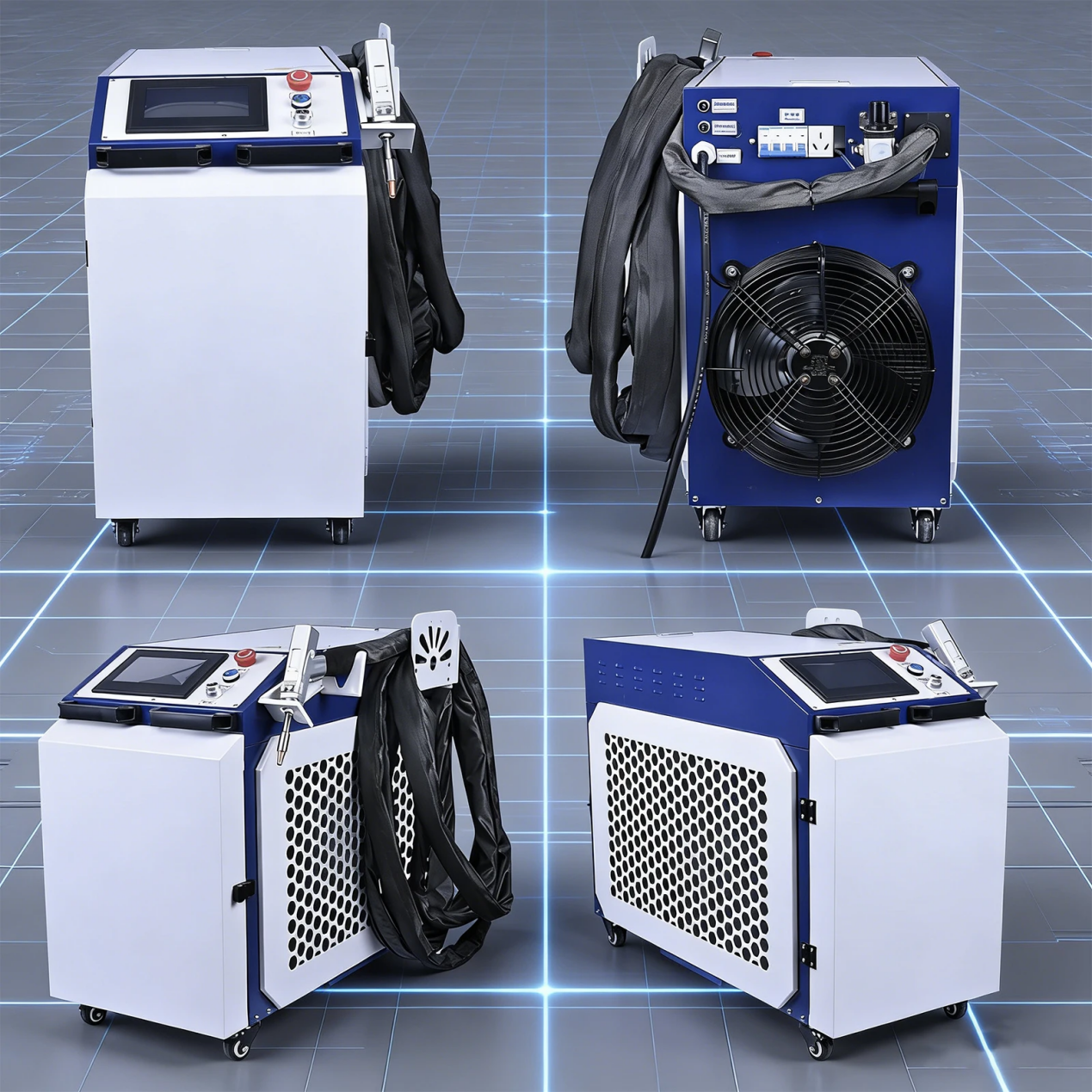
RICHMAC manufactures both high-precision laser and router equipment, which makes a balanced evaluation more useful than a technology-first recommendation. When panel work also includes fabrication of frames, brackets, or other metal assemblies, adjacent equipment such as a 4 in 1 fiber laser welding machine may belong in a broader production-cell review. It should not, however, be treated as a substitute for selecting the correct panel-cutting and machining process.
The buying decision should follow the finished panel
A CNC router usually delivers better long-term value when panels require depth machining, drilled features, thicker stock processing, varied materials, or reduced dependence on secondary stations. Its advantage is not that it replaces every laser cutter. Its advantage is that it can convert a sheet into a more complete component in a single controlled workflow.
Choose a laser when the work is genuinely laser-led: high-throughput profile cutting in compatible materials with acceptable thermal edge results. Choose a router when the panel itself must be machined, not merely separated. Framing the decision around finished-part requirements, workholding, downstream labor, and material behavior will lead to a more durable equipment choice than comparing speed figures alone.
 4 in 1 fiber laser welding machineOverview of 4 in 1 fiber laser welding machine
High-Speed, Flawless Welds with Zero Experience Required
The 4 in 1 fiber laser welding machine represents the next generation of metal joining technology. By replacing traditional Argon Arc Welding (TIG) and Electric Welding (MIG), this system delivers processing speeds up to 4 to 10 times faster, minimal heat-affected zones, and incredibly aesthetic weld seams. Whether configured as a flexible handheld unit or an automated robotic system, it is the ultimate tool for modern, high-efficiency metal fabrication Entry Level Pipe laser CutterOverview of Entry Level Pipe laser Cutter
-High Efficiency
-Budget Friendly
-Precision Performance
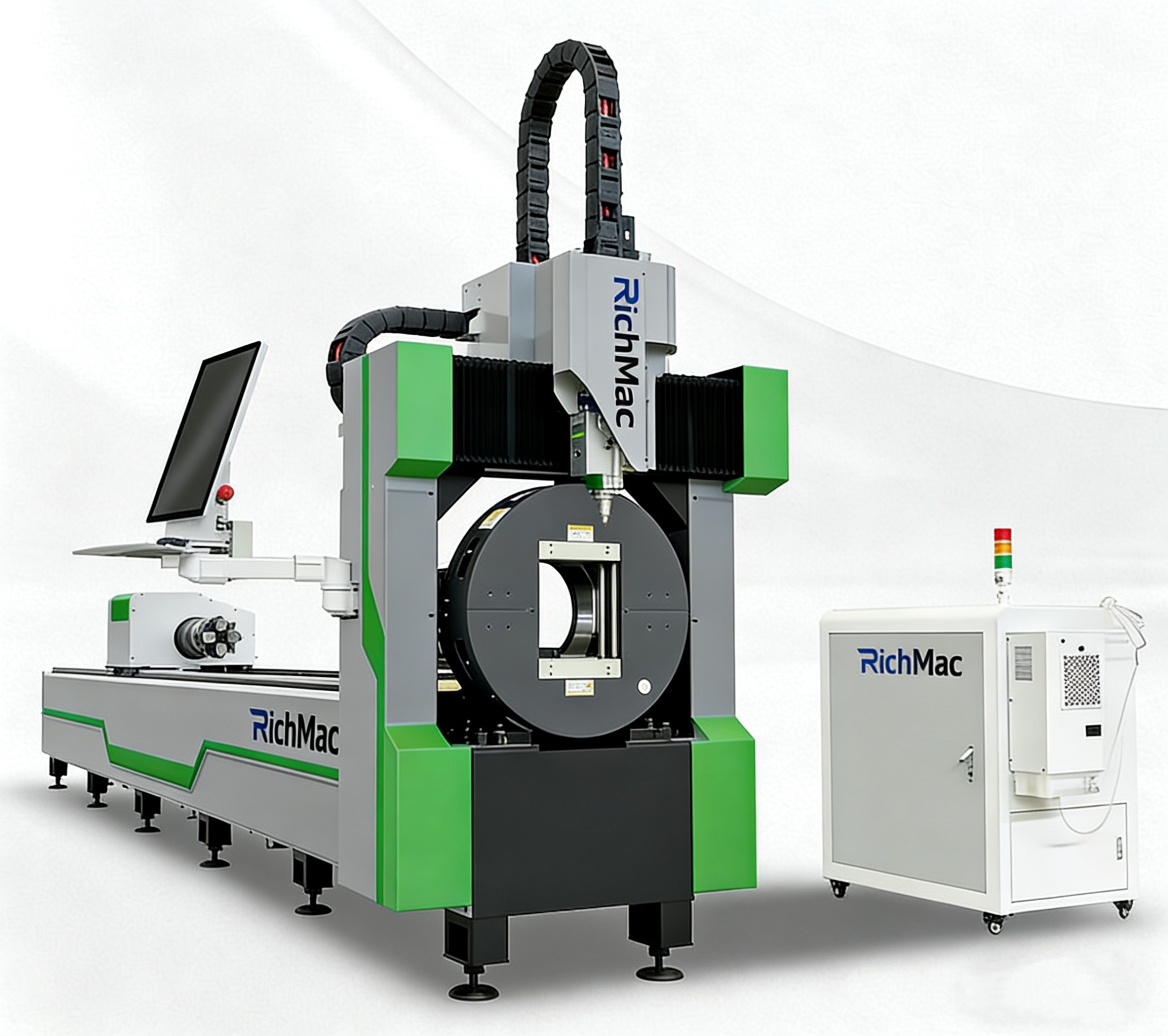
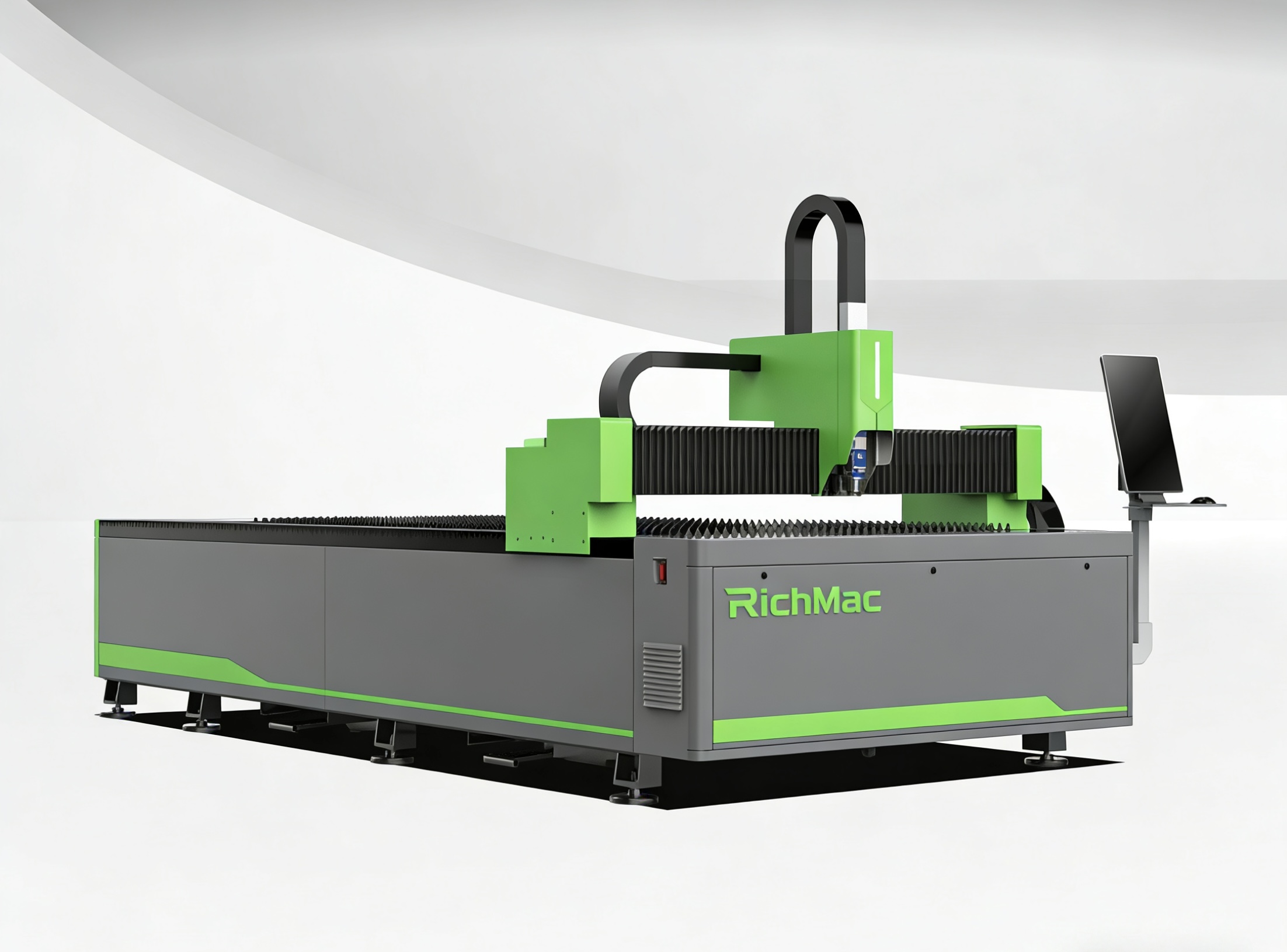
The Entry Level Pipe laser Cutter is designed specifically for small to medium-sized enterprises (SMEs) looking to automate their metal fabrication with a minimal initial investment. It offers the perfect balance of cutting speed, accuracy, and affordability, making it the ideal "entry-level" solution for processing various metal profiles including round, square, and rectangular tubes. Metal Sheet Fiber Laser CutterRichMac Metal Sheet Fiber Laser Cutter represents the pinnacle of modern metal processing technology. Designed for high precision, incredible speed, and maximum durability, this system utilizes a world-class fiber laser source to deliver clean, burr-free cuts across a wide variety of conductive materials.
Leave A Reply
Get real-time quotes
Interested? Leave your contact details.